Night-Time Safety and Accessibility

Across cities, major venues, and regions, the night-time economy depends on people being able to travel home safely and with confidence. However, late-night accessible mobility remains inadequate. Transport services often reduce frequency overnight, coverage can be uneven, and large events can create sudden peaks in demand that the network was not originally designed to accommodate.
Safer walking routes tailored to the local context
Uncertainty about how to travel home safely can discourage participation in the night-time economy, particularly for women, younger people, BIPOC, and the LGBTQ+ community. Over 50% of music fans say that transport is a barrier to attending gigs. This makes venues feel inaccessible, even when they are in the centre of town, and this anxiety is reflected in return journey data. 40% of visitors travel to venues on public transport, but only 18% return home on these networks. For cities, venues, and event organisers, improving the clarity and accessibility of late-night travel options is therefore both a safety priority and an operational requirement.
‘You. Smart. Thing.’ (YST) is a travel demand management and multimodal journey planning platform designed to address these inequalities of access. For cities, business improvement districts, venues, and major events, the platform focuses on three key outcomes that support safer and more accessible night-time travel.
Walking is often an essential part of late-night journeys, particularly when connecting venues with nearby transport hubs. However, not all routes provide the same level of safety or reassurance after dark. According to a YouGov poll, 7 in 10 women changed their route to avoid walking in the dark during darker months.
YST enables cities and event organisers to define managed walking routes that reflect the realities of the local environment. Routes can be designed to prioritise well-lit streets, avoid parks or isolated areas, and highlight stewarded corridors during large events.
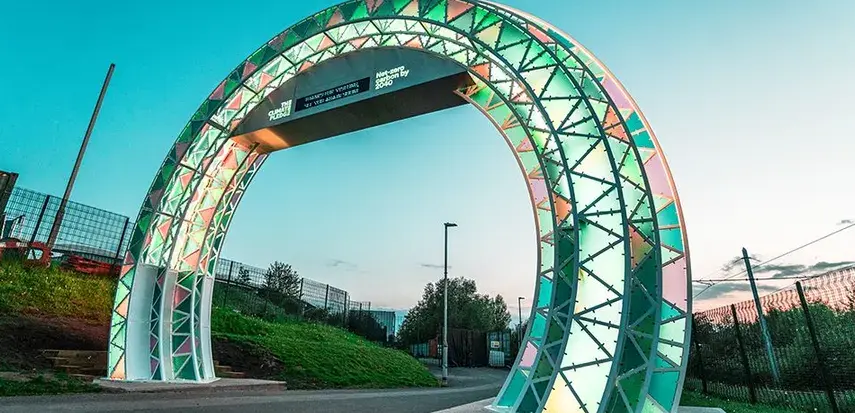
(Co-op Live, The Climate Pledge Arch)
Manchester
In Manchester, the travel assistant supporting Co-op Live highlights the CityLink walking route, guiding attendees between the arena and city-centre transport hubs using approved pedestrian corridors.
This helps manage pedestrian flows while improving confidence for visitors travelling back at night.
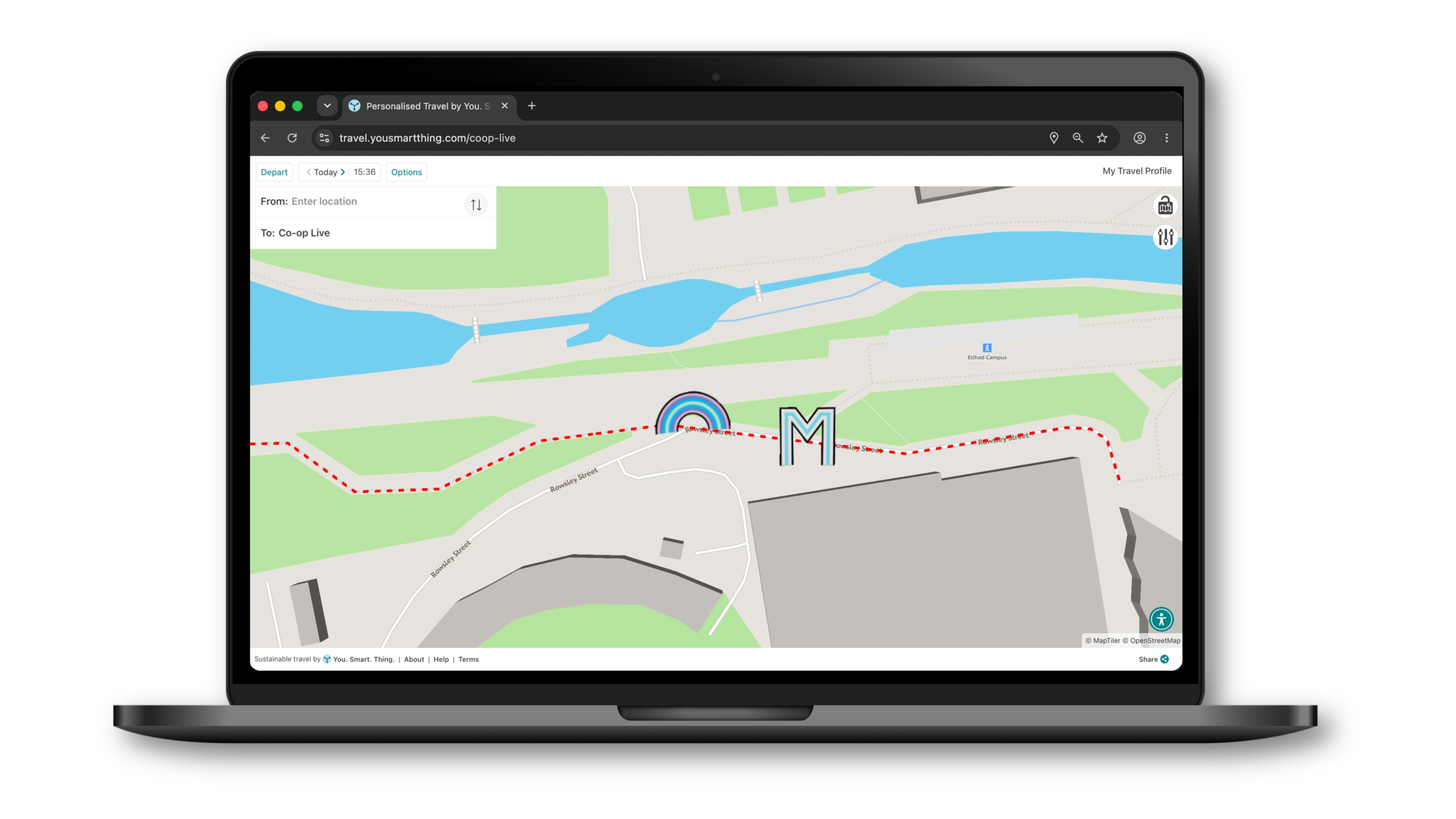
(Manchester, Co-op Live CityLink Travel Assistant, 2026)
Coventry City Council
‘You. Smart. Thing.’ also supports everyday travel for young people & students. The “Safety Talk and Walk”, delivered with Coventry City Council and Coventry Business Improvement District (BID), had students walk the ‘safety route’ between participating bars & venues. They received guidance on safer walking routes between venues, transport interchanges, and key city-centre destinations.
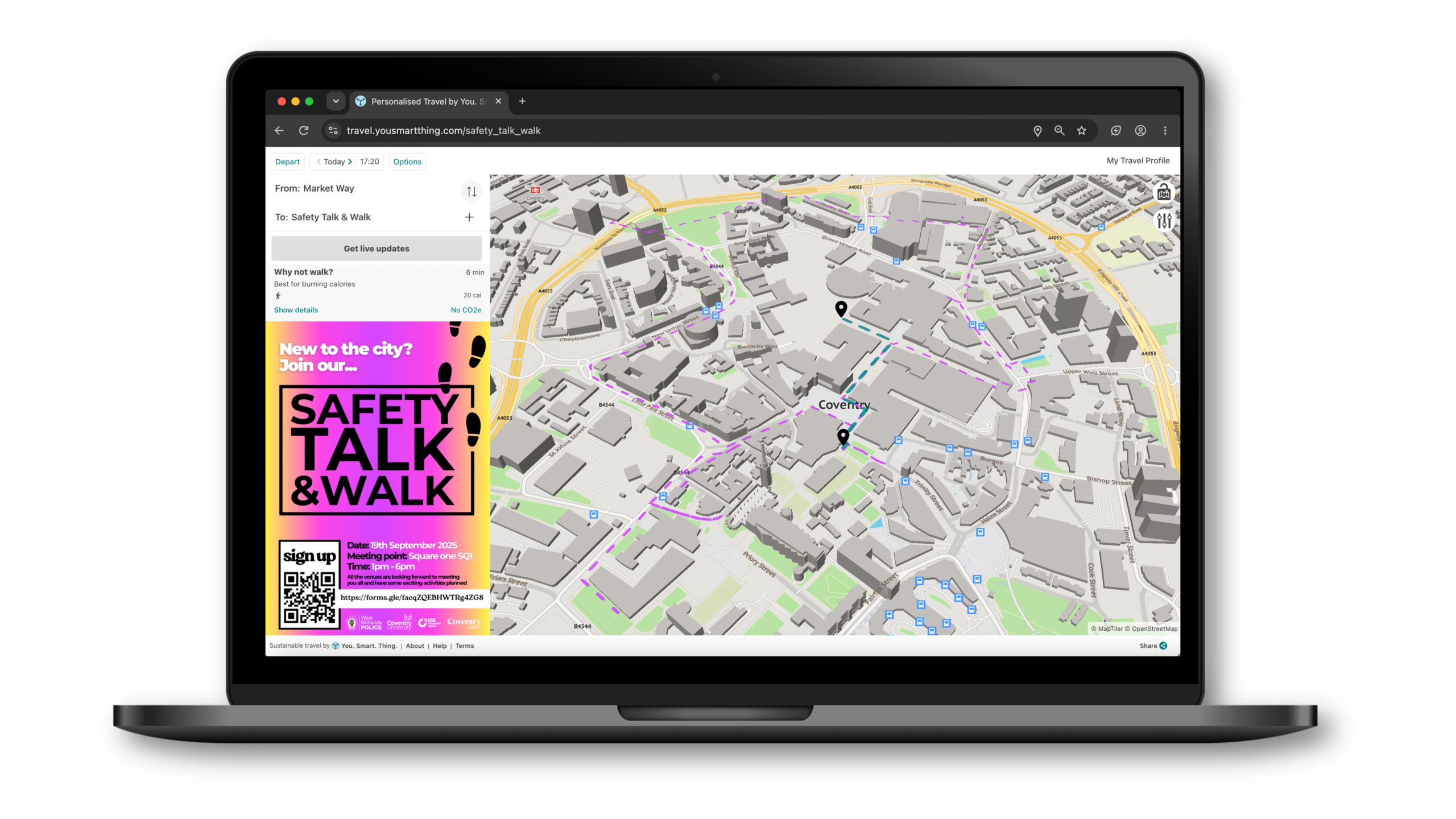
(Coventry, Safety Talk and Walk Travel Assistant, 2026)
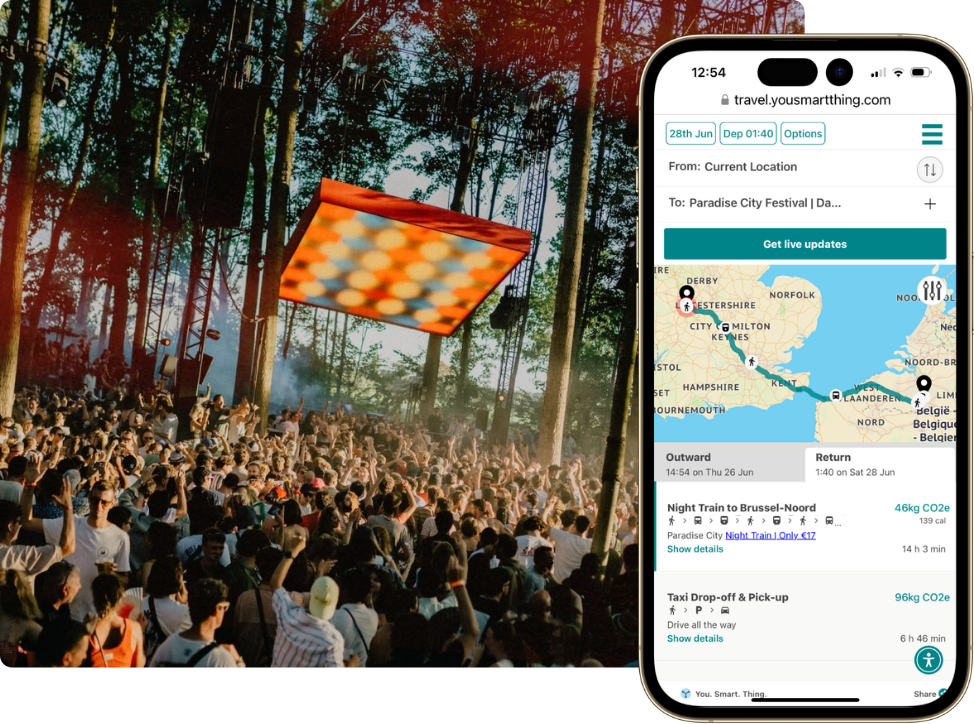
(Credit: Paradise City Festival Travel Assistant, 2025 /Facebook)
Event-specific travel planning
Late-night events can create transport demand that does not align with transport provision. Without clear information, attendees may be uncertain whether viable transport options exist once events finish.
YST allows event organisers and transport partners to configure bespoke late-night transport services directly into the journey planner, alongside existing public transport networks. This enables users to plan return journeys in advance and receive timely reminders, such as notifications to leave in time for the last train.
At Paradise City Festival 2025 in Belgium, the platform integrated specially commissioned night trains into the festival travel assistant. Attendees could plan and secure their return journeys ahead of time, providing reassurance that transport options would be available after the event. The night trains subsequently sold out, demonstrating strong engagement with the travel assistant.
Making night journeys more legible and accessible
A common barrier to safe late-night travel is not only service availability but also awareness of available options. Many people rely on habitual travel choices, even when alternative combinations of transport may be safer or more convenient.
YST presents multiple multimodal journey options, including combinations such as taxi and train, ensuring that users understand the full range of possibilities available to them. By making these options visible and comparable, the platform encourages people to plan ahead and reduces the risk of missing key services such as the last train, and then taking an expensive long-distance taxi.
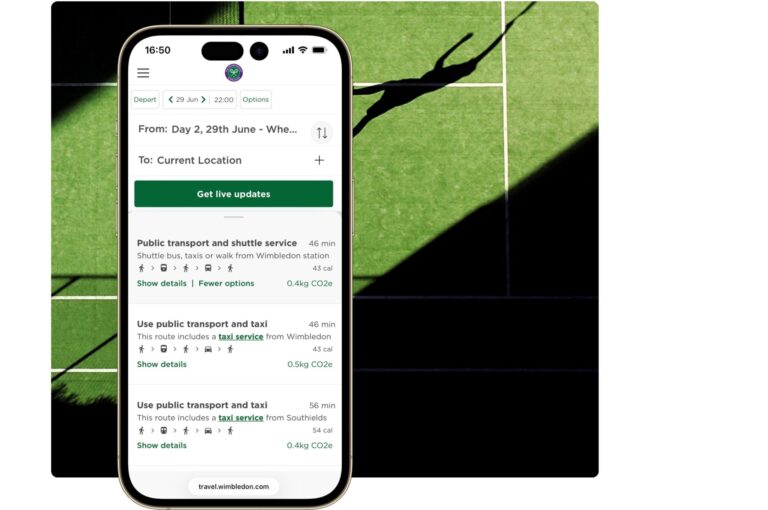
(Wimbledon Travel Assistant, 2026)
For specific ‘parties’ and late-night events at be.at’s AFAS Dome, audiences can plan their travel home in advance with the be•at night bus – a commissioned, frequent night bus service running until 5AM to Antwerp Central Station and local Park & Rides, ensuring peace of mind.
ⓘ Across event deployments, this approach has demonstrated measurable behaviour change. At DF Concerts’ Glasgow Summer Sessions in 2025, clear journey planning and sustainable travel nudges contributed to a 100% increase in public transport use compared with the previous year.
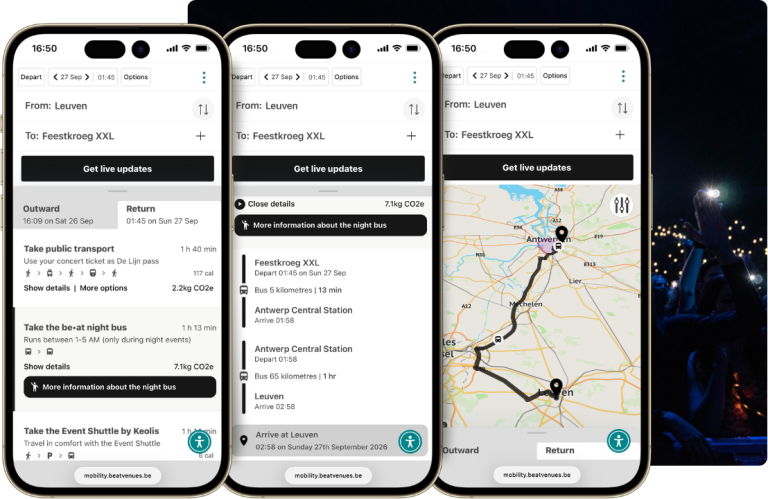
(be•at, AFAS Dome Travel Assistant, 2026)
Enabling safer participation in the night-time economy
For event organisers and local councils, the role of journey planning extends beyond navigation. By providing trusted information, controlled walking routes, and clear transport options, cities and event organisers can reduce uncertainty and improve confidence in travelling at night.
In doing so, travel demand management becomes a practical tool for strengthening safety, accessibility, and participation across the night-time economy.