Esports is the latest high growth phenomenon in major events – but as a mass participation sport, where does it sit on the on the Sustainability Leaderboard?

Esports commands global audiences, sells out arenas within minutes, and generates billions in revenue. What began as online competition has evolved into a global live events industry, attracting international travel, large-scale production, and significant destination impact.
Yet as the industry competes for scale, spectacle, and commercial growth, one question remains largely unanswered: how does esports rank on the sustainability leaderboard?
Leveling up: redefining sustainability in global Esports events
Short for electronic sports, esports has established itself as one of the most exciting and dynamic sectors in global sport and entertainment. Once a niche, online competition format, esports now fills arenas, drives international tourism, and alongside computing power a significant environmental footprint from travel.
By 2026, global esports revenues are projected to reach US$5.1 billion [1]. The scale of this growth has positioned esports as a serious economic opportunity for host cities, rights holders, and event organisers alike. The majority of players and fans sit within the Asia-Pacific region, followed by the Middle East and the Americas, although Europe as a market is growing [2].
As the sector matures, its influence on destination economies and the live events sector continues to expand. This growth will lead to increased operational complexity, and the opportunity to set standards for the rest of the events industry.
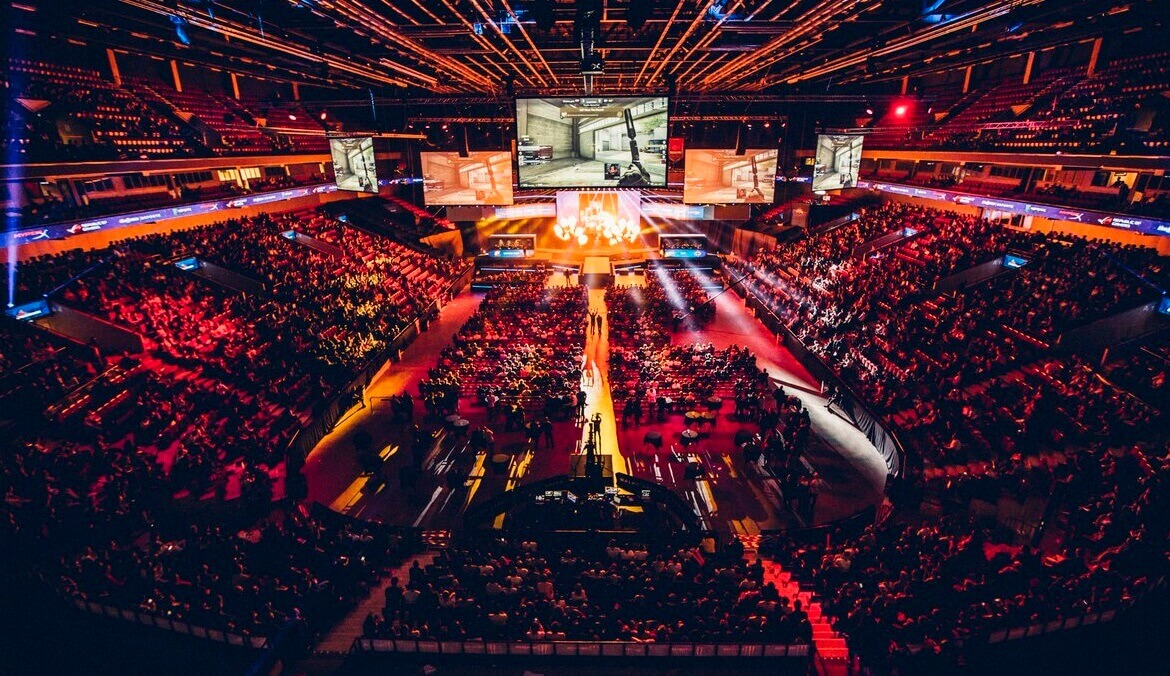
(Malmö Arena | Malmö (15 500 seats), Image via senet.cloud, Top Esports Arenas in the World)
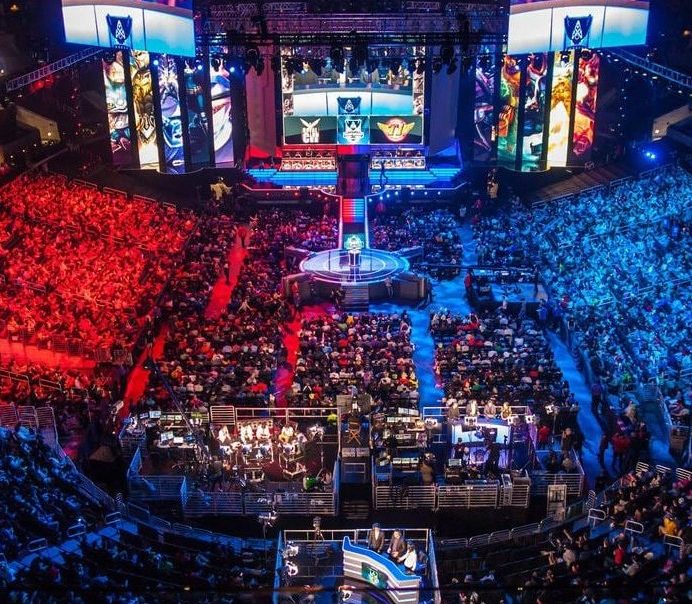
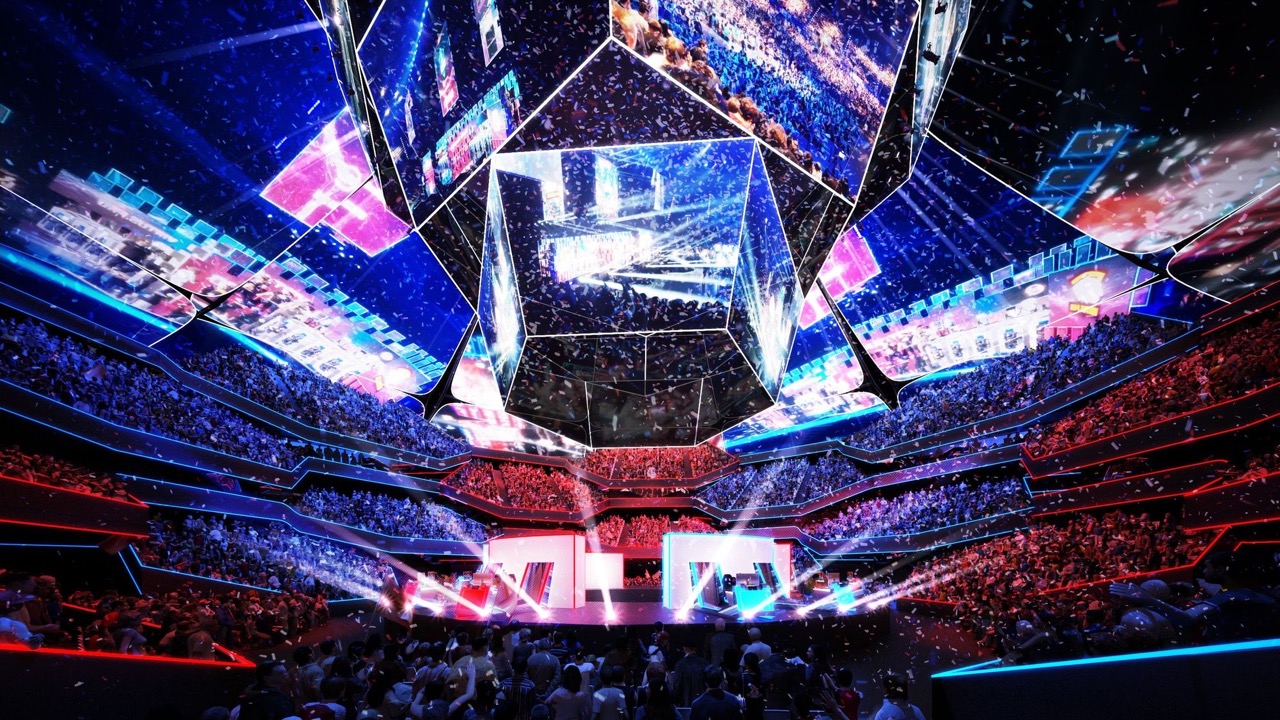
(Staples Centre | Los Angeles (20 000 seats), Image via: senet.cloud)
From online competition to global live spectacle
Esports may have started online, but its most powerful moments now happen in person. International finals, franchise leagues, and publisher-led tournaments are staged as high-production live events, combining sport, entertainment, and festival culture. Millions watch online globally, while thousands travel to arenas to participate in the shared experience. For example, the 2024 League of Legends World Championship at London’s O2 Arena generated a £12 million economic boost for the UK, bringing more than 14,000 fans together [3].
The tourism opportunity cannot be understated. At the BLAST.tv Austin Major 2025 for Counter-Strike 2 in Texas, over 40,000 attendees travelled from 37 countries and all 50 US states [4]. These events are bigger than tournaments; they are cultural gatherings where fans meet players, engage with brands, and experience esports as a community. Tickets frequently sell out within minutes, reinforcing the global scale of demand regardless of location.
Academic studies have demonstrated the economic impact from both esports and the wider sports sector [5]. As such, cities and economies are starting to embed the sector into the urban fabric, for cultural, economic and tourism opportunities. Quiddiya’s planned Gaming & Esports District in Saudi Arabia [6] is just one example of esports’ impact on urban event rhythms and design.
The operational footprint behind tournaments
Hosting a tier-one esports tournament requires arena infrastructure, broadcast compounds, fan zones, brand activations, and global logistics operations. Despite esports being digitally native, its live events function operationally like major international sporting competitions.
As the sporting world is developing their sustainability strategy, esports is not far behind. The Global Esports Federation joined the UN Sports for Climate Action initiative in 2021, signalling intent at an institutional level [7], alongside other major sporting federations. However, esports thus far has narrowly focused on energy consumption. Tournament operators and publishers have begun investing in energy-efficient gaming hardware and more efficient live production systems [8].
As we all know, sustainability reaches into all aspects & operations of a live event. There remains a disconnect between esports as an online phenomenon and the real-world impacts of hosting such global tournaments. Spectator travel can account for up to 90 percent of total event emissions in sport [9]. Given esports’ international fanbase, it is imperative to measure and reduce the carbon impact of visitor travel.
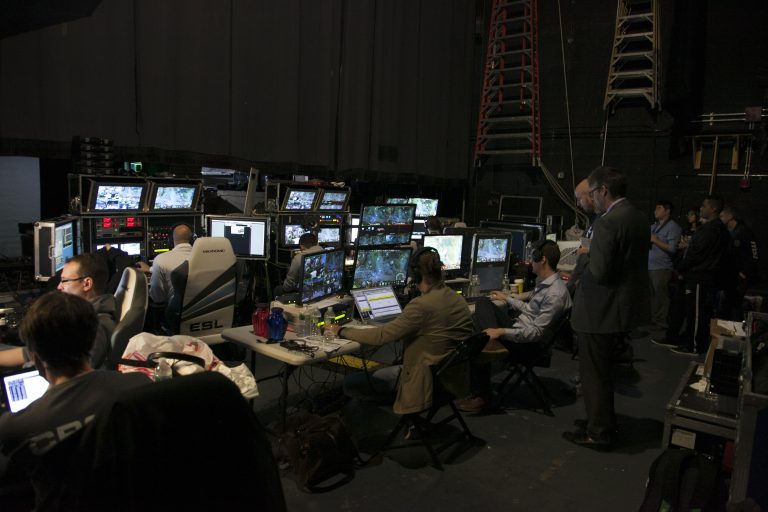
(Backstage preparations at an ESL esports event., Image via ESL.com)
Promoting viable sustainable travel options
Fans travel because live esports offers something digital cannot replicate, an electric atmosphere, a sense of community, and shared identity. But unlike production energy or hardware supply chains, travel demand is dynamic. It can be influenced & managed through planning, communications, and infrastructure.
As a sport championing live experiences and innovation, understanding an event’s footprint – from door-to-seat as well as production to streaming – is imperative in today’s event landscape. Understanding audience geography, journey types, and multi-modal options enables organisers to shape how people arrive, not just where they sit. Additionally, as fans are travelling from across the world, promoting viable sustainable travel options is key to reducing an event’s footprint. This allows fans to make thoughtful choices, considering their individual needs, locations, and options available to them. This is where innovative & integrated travel demand management becomes operationally valuable. Without this visibility, organisers operate with limited control over their event footprint & experience.
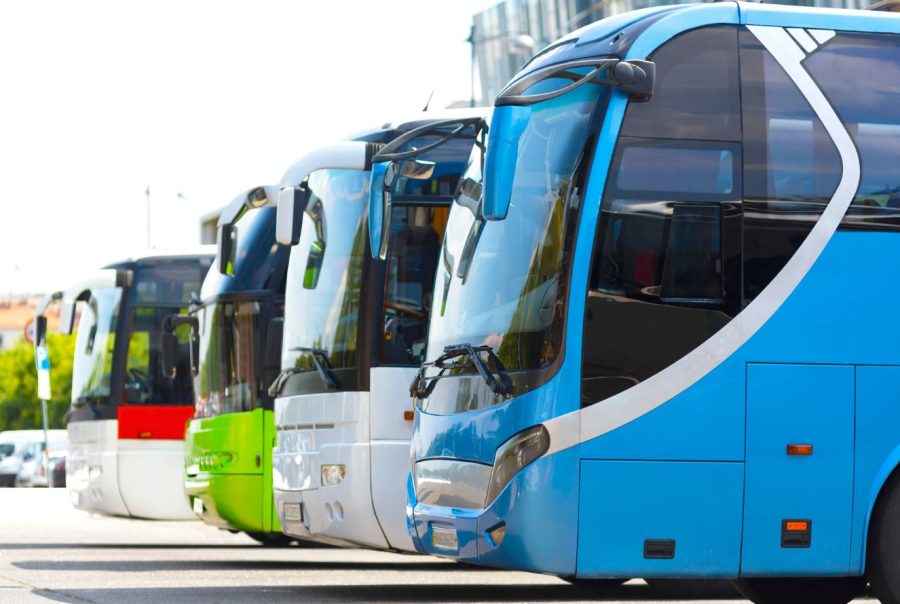
Providing personalised travel guidance, integrating public transport, deploying event shuttles, and promoting active travel options can influence behaviour at scale, through practical, bookable, event-specific travel planning. We challenge esports to a global leaderboard of event emissions. Let’s bring the competition to fans before they leave their homes, incentivising fans to travel sustainably. For tournament organisers, this means putting on event shuttle buses, promoting active travel options, and using travel data to improve operations event after event.
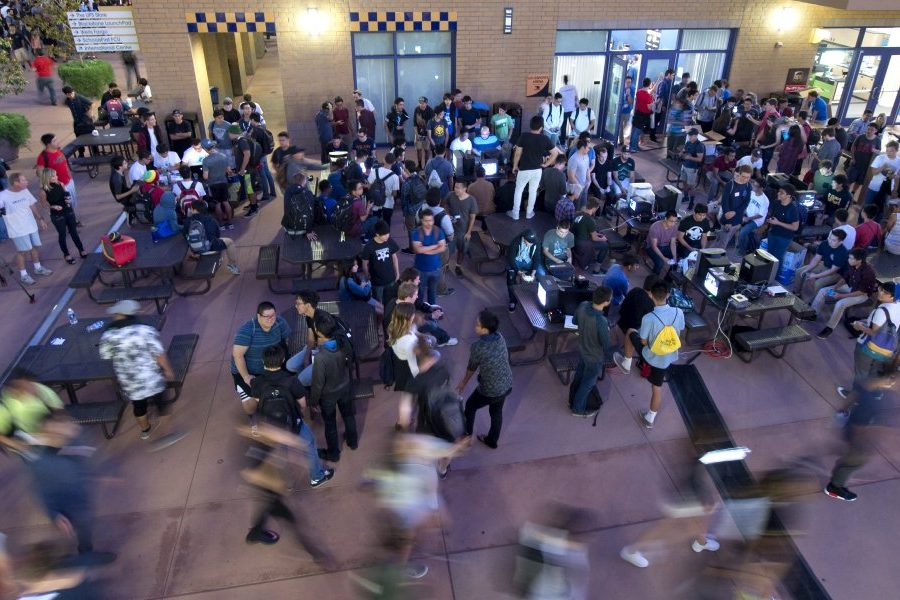
(Banner image via SportsPlanningGuide.com — “The Kings and Queens of Esports: Games and Venues)
Reframing mobilty as part of the event experience
By integrating travel demand management into event planning, organisers can maintain the magic of global, in-person competitions whilst improving how audiences move to and around host destinations.
Esports will continue to bring people together to compete across the world. The task now is ensuring their journeys are planned with the same innovative thinking as the tournaments themselves. Unforgettable experiences begin long before fans enter the arena.
From the point of consideration to planning and embarking on an esports adventure, ‘how to get there’ is a gaming paradigm rich with experiential opportunity and potential for positive environmental impact.
References
[1] https://www.statista.com/outlook/amo/esports/worldwide?srsltid=AfmBOopMT8XcbgVCl0ZynWfFr5sZxZgWPZ6Ag2g5dinRRC_OVVhb4dL
[2] https://www.deloitte.com/ch/en/Industries/tmt/analysis/the-swiss-esports-market.html?utm_source=chatgpt.com
[3] https://www.london.gov.uk/media-centre/mayors-press-release/World-Championship-esports-event-to-deliver-12m-boost-to-Londons-economy#:~:text=Notes%20to%20editors,previous%20League%20of%20Legends%20events.
[4] https://esportsinsider.com/2025/12/blast-austin-major-2025-economic-impact
[5] https://www.researchgate.net/publication/334065730_E-Sport_Events_within_Tourism_Paradigm_A_Conceptual_Discussion
[6] https://qiddiya.com
[7] https://esportsinsider.com/2021/03/gef-joins-sports-for-climate-action-initiative
[8] https://onlinelibrary.wiley.com/doi/full/10.1002/sd.70618
[9] https://res.cloudinary.com/utmb-world/image/upload/v1749215599/montblanc/Environnement/UTMB_2024_carbon_footprint_EN_tf744e.pdf