Betting On the Journey: Britain’s racecourses have lost visitors before the first race. The journey experience is the key to turning it around.

The hat is chosen. The outfit is planned. For millions of racegoers, Royal Ascot, the Cheltenham Festival, the Grand National, or a summer day at Doncaster, isn’t just a sporting event – it’s an occasion. An entire day, or even a whole weekend, built around an atmosphere that no other sport quite replicates. But, there’s an uncomfortable truth hiding behind the fascinators and the champagne: Britain’s racecourses have lost people before the first horse leaves the starting gate. And the culprit isn’t ticket prices, the fear of betting on the slowest horse, or the racing itself – it’s the journey there and back.
At ‘You. Smart. Thing.’ (YST) we believe the visitor travel experience may be horse racing’s single biggest untapped opportunity. Get it right, and you don’t just sell more tickets, you protect the economic engine at the heart of the equestrian community.
The Starting Gate Problem
Horse racing is the UK’s second largest sport by attendance after football, generating over £4 billion annually [1] and supporting around 85,000 jobs across the country. The Cheltenham Festival alone was worth an estimated £274 million to the Gloucestershire economy in 2022 [2], nearly triple its impact from 2016. The Grand National generates £60 million for the Liverpool City Region each year. These aren’t just sporting events. They are economic infrastructure.
And yet, attendance is sliding. Cheltenham’s 2022 peak of 280,000 visitors fell to under 219,000 in 2024 – a 22% drop in two years [3]. With just over 226,000 visitors in 2026 ticket sales haven’t fully bounced back [4]. Across British racing more broadly, whilst premier race day fixtures are maintaining moderate growth, mid-tier racing is under much greater pressure. This is a trend that threatens to spill over into premier race day fixtures. Cheltenham’s organisers have increased car park capacity to be the size of 17 football pitches and introduced park and ride services from 20 locations [5]. The effort to get people to the racecourse is real, but something structural is still getting in the way and it is costing the sport far more than most people realise.
Capacity restrictions and inefficient use of space due to reliance on car parking impact event economics. Racecourses routinely rent out nearby land to accommodate travel demand. This is money spent managing a problem: private car dependency. Better travel demand management would address this issue at the source. Shift travel behaviour away from driving, and you don’t just cut emissions and congestion, you also increase the capacity cap, reduce the event’s land footprint, and free up resources that can be invested into the racegoer experience.
The most forward thinking sports venues in the world are already drawing this conclusion. New York Mets, a YST client, have taken it a step further. Rather than continuing to operate 50 acres of surface parking at Citi Field, the club is transforming the entire site into Metropolitan Park: an $8.1 billion development containing a casino and sportsbook, restaurants, retail, a live music venue, and 25 acres of public parkland. The parking lot, in other words, has become a destination.
For a first-time racegoer, exactly what the racing demographic needs, the logistics can feel overwhelming. Prestige alone will not sustain the sport. The experience of getting there must match the experience of being there.
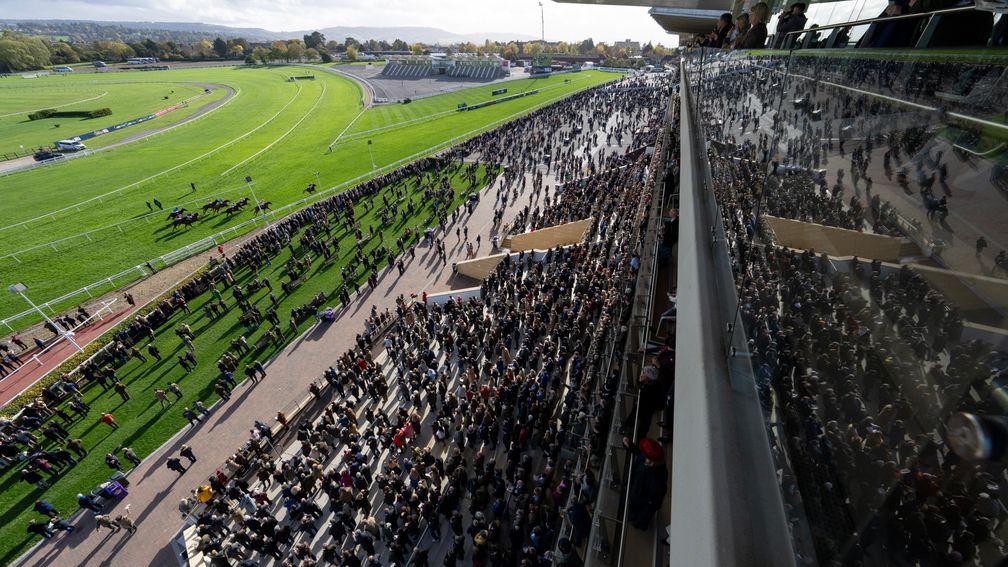
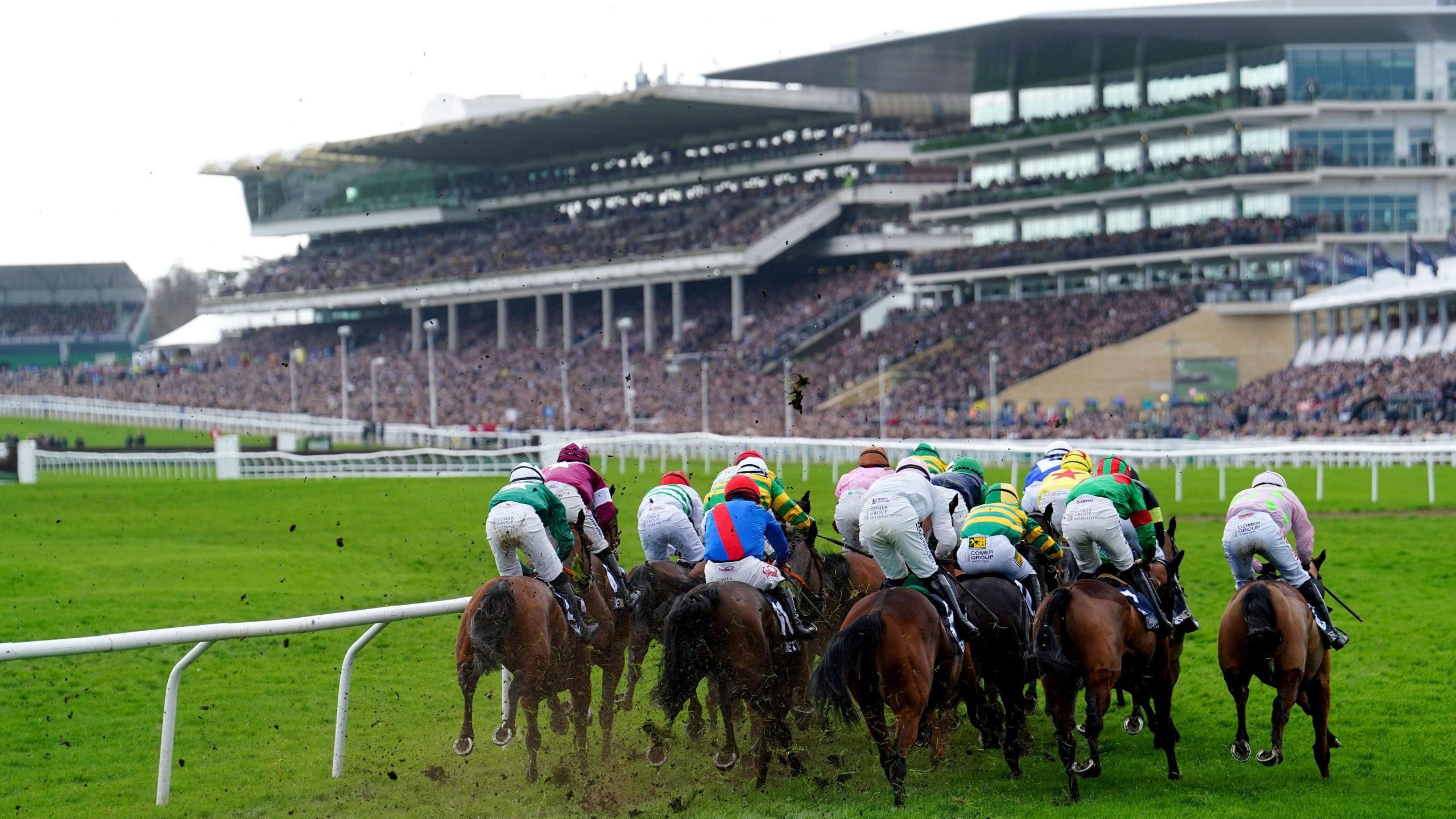
(Image: BBC News)
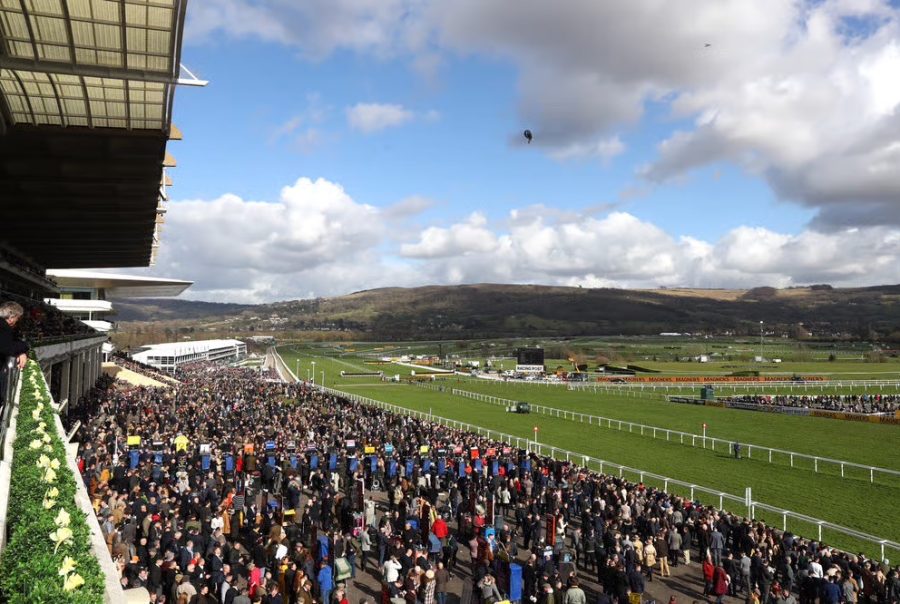
(Image: PA Images)
(Image: Getty Images)
It’s Not Just a Race Day – It’s a Destination
Here’s what racecourse event organisers already know but perhaps underestimate: a significant proportion of their visitors don’t just come for the racing. They come and they stay. Around a third of Cheltenham festival visitors arrive at least a day before the event [6] and stay on afterwards. Attendees sleep in local accommodation, eat in local restaurants, spend money in local shops. The racecourse is the anchor, but the destination is the whole region.
This is destination tourism in live action, and it creates a powerful argument for a different kind of partnership. When a racecourse works collaboratively with local councils, transport operators, hotels, and local businesses to create a seamless, integrated visitor journey, everyone wins, more people come, more people stay, and more people come back.
The challenge (and the opportunity) is coordination. Getting all those stakeholders on the same page to better understand how visitors are travelling, where the pinch points are, and what would make the journey better. That’s exactly what the YST platform helps event organisers to do.
The London Marathon Events Parallel: What Running Figured Out
London Marathon Events (LME) has demonstrated how major sporting events can use travel planning and visitor experience management to enhance the participant and spectator experience, as well as an event’s environmental sustainability credentials – a key consideration for stakeholders, such as host destination residents, local councils and event organisers. Coordinated bespoke shuttle-bus services, pre-event travel information directly from the LME comms team, and tailored multi-modal travel planning don’t just reduce congestion, they reduce emissions, stress, and they make a first-time visitor feel like a welcome guest.
Horse racing has an even richer engagement opportunity. The social fabric of race days, from the fashion to the tradition and shared excitement means visitors want to be part of something, from the moment they consider attending, through the build-up, en route travel, to the journey back home, and sharing their experience post-event.
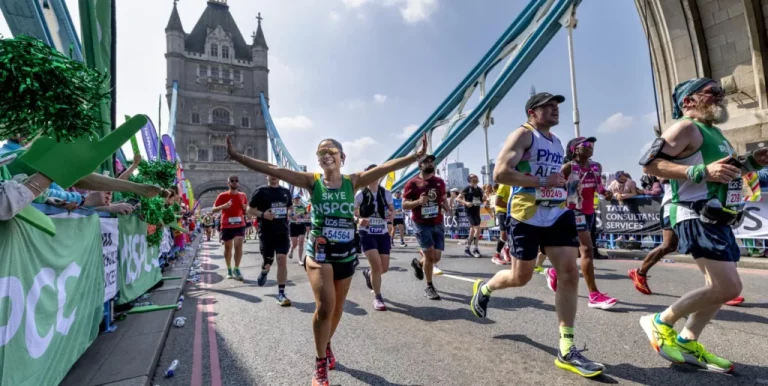
(Image: London Marathon Events)
Redefining Race Day
Horse racing faces a few reputational challenges, often countered through state-of-the-art animal welfare standards and a regulatory framework that has helped shape responsible betting policy. An aging fanbase, however, means that the sport cannot rely on tradition alone to recruit the next generation of racegoers. Gen Z, a sustainability-aware generation that racecourses are eager to attract, is increasingly drawn to events that show clear environmental and social responsibility.
As a Gen Z myself, my first exposure to horse racing wasn’t through my lifelong passion for the sport, but instead, it was a day out with friends tied to a social occasion and live music. Concerts at the races are fantastic at drawing in younger crowds who might not otherwise attend a sporting event, combining live sport with the atmosphere of a festival. This is ‘sportainment’, and it’s quietly reshaping what race day looks and feels like.
The commercial logic makes sense: a broader, more diverse audience means more tickets sold, stronger sponsorship value, and a long-term fanbase. But along with this comes a transport dimension that is rarely discussed yet is just as important. When entertainment spans across the event day or people stay for a concert after the last race, peak travel demand is spread across a longer window. That easing of the egress spike is not just a smoother experience for racegoers, but it also reduces pressure on roads, rail services and shuttle infrastructure, lowering the cost and complexity of transport operations for the organsier. Done well, sportainment doesn’t just sell more tickets, it addresses event egress bottlenecks, reduces peak demand and eases pressure on infrastructure.
The Racecourse Association has noted that 40% of racing fans are women, which is twice the average across other sports. Audience diversification is already happening. The opportunity to serve new audiences better, from the moment they decide to come along to the moment they get home, is what will define the future of the sport.
What Better Looks Like:
Imagine a racegoer who buys their ticket and immediately receives a personalised low-carbon travel plan from the exact location they’re coming from. They book their train and reserve their shuttle bus from the station via the officially recommended and integrated services. On the morning of the race, they receive a push notification confirming their transport is set and letting them know which gate to use for their specific ticket type. On the way home, they know exactly which gate to depart from, and the event organiser is able to look at the data, and manage a departure system that has people moving smoothly in line with their itinerary, rather than facing frustrating queues as they try to get away.
The racegoer doesn’t just have a better day and a better mood; they tell people about it, they come back next year, and most importantly, they bring someone new.
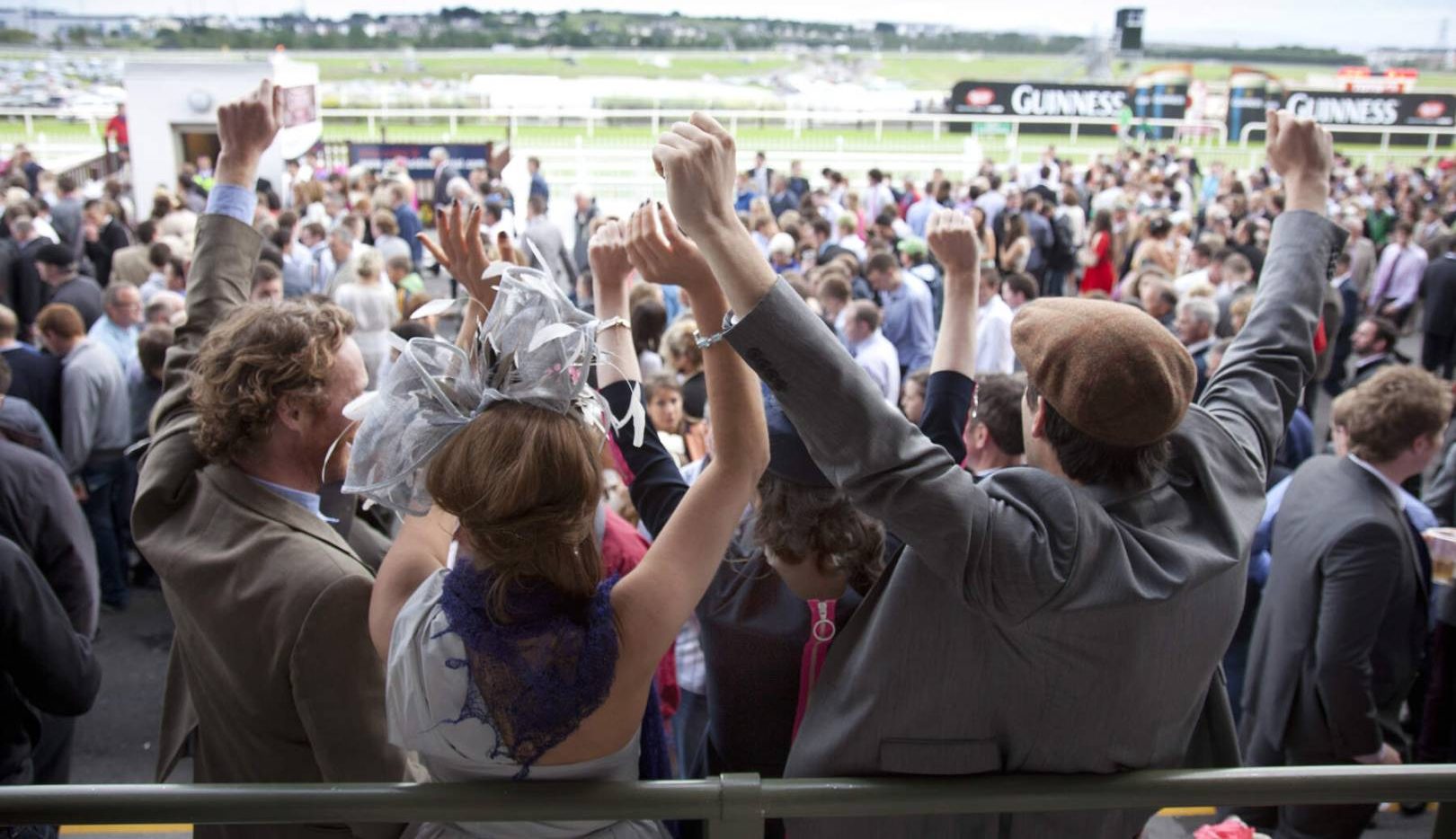
(Image: Holiday Ireland Tours)
The Role of YST:
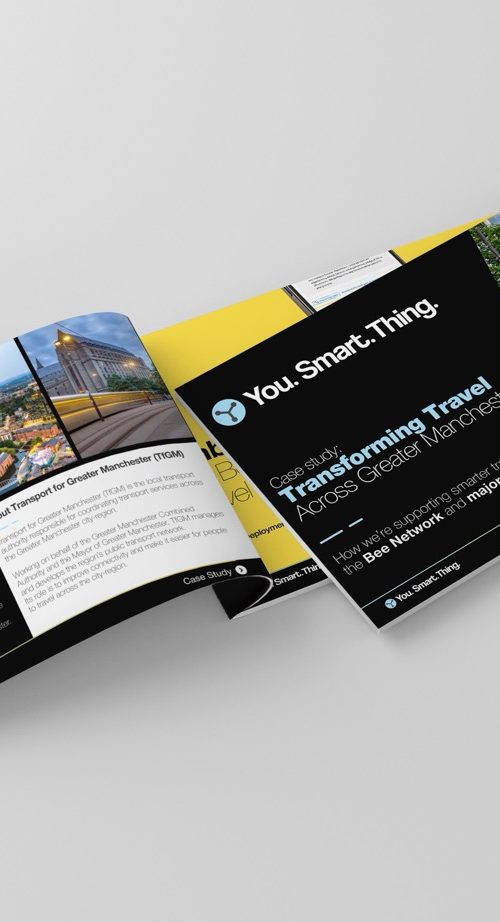
‘You. Smart. Thing.’ is a travel demand management platform designed specifically for challenges like this. We work with event organisers, venues, and destinations to shape how visitors travel to and from events, optimising people flow to improve both operational efficiency and commercial performance. By tailoring routes and integrating bespoke transport services not typically surfaced in standard journey planners, we help deliver smoother, more sustainable visitor journeys. In doing so, we also capture business-critical visitor behaviour and experience data that is otherwise lost to third-party platforms.
For horse racing event organisers that means:
- Pre-event travel planning tools tailored for racegoers that help visitors understand each journey option and nudge them towards the lowest-carbon route
- Operational insight and demand forecasting, giving racecourses the data they need to optimise transport, crowd flow, accessibility, and revenues
- Sustainability reporting that enables racecourses to evidence progress towards environmental commitments and strengthens reputation with stakeholders
- Real time communication that keeps racegoers informed about delays, shuttle capacity, road congestion, and wayfinding to reduce stress and improve the overall visitor experience.
By positioning their YST powered ‘travel assistant’ service as a new channel for sponsorship and revenue – racecourses can promote hospitality upgrades, transport partners, accommodation partners and more at the exact moment of consideration.
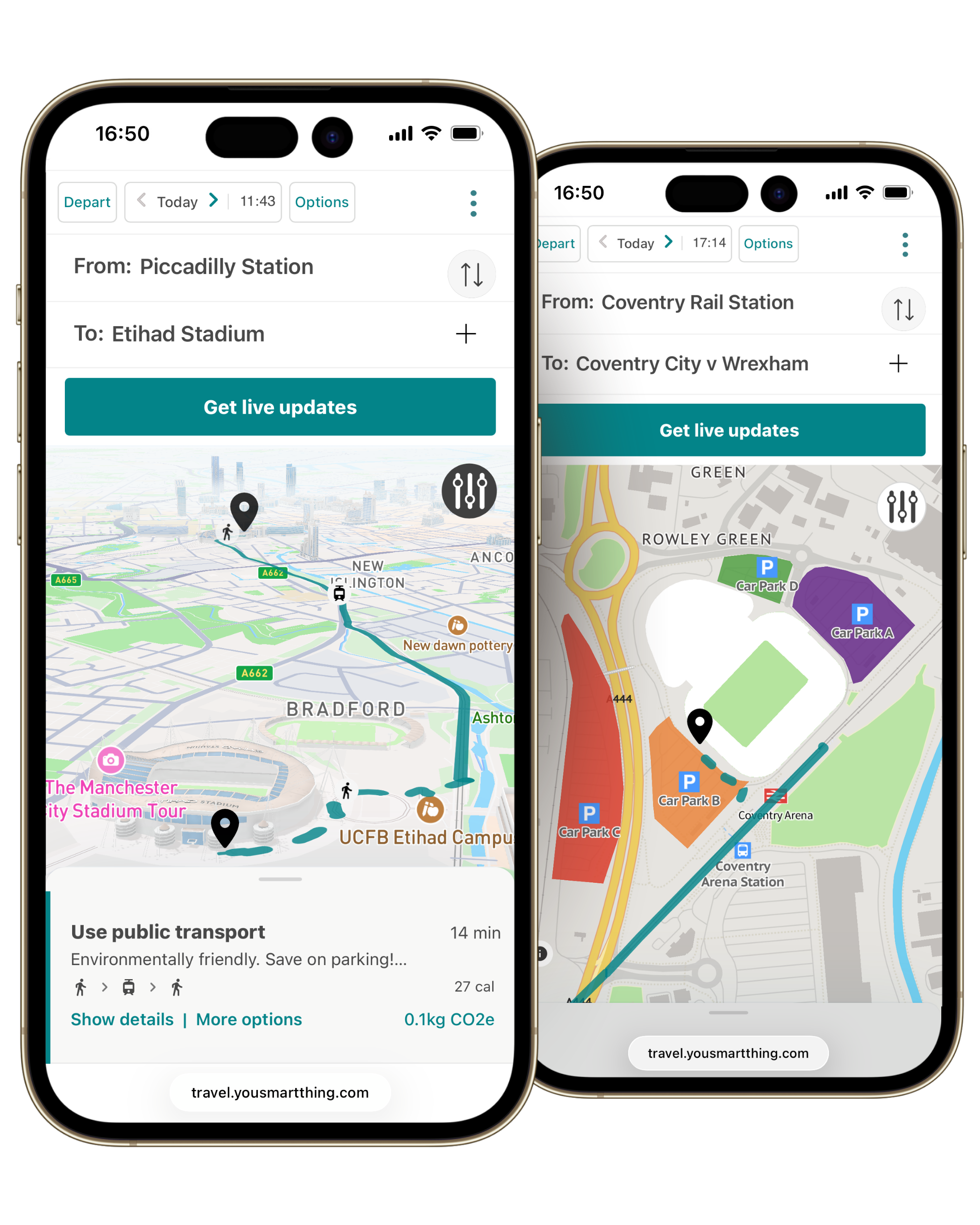
Above: Travel assistant deployments showing personalised travel plans with sustainable options, enhanced 3D maps, parking areas, and gate-specific wayfinding.
Crossing the Finish Line:
The economic case for horse racing in the UK is significant, but it’s not guaranteed. It very much depends on people turning up, and people turning up depends on the end experience being worth it.
The sport has everything it needs to thrive: tradition, heritage, spectacle, social energy, and some of the most iconic venues in British sport. What it needs now is travel demand and crowd flow management to match – catalysing experiences that tell racegoers, from the moment they set off, that they’re heading somewhere special!
If you’re responsible for attendance, visitor experience, or commercial growth at a UK horse racing event or racecourse venue, we’d love to talk.
References
[1] https://committees.parliament.uk/writtenevidence/7020/pdf/
[2] https://www.bbc.co.uk/news/uk-england-gloucestershire-64887644
[3] https://alltodayhorseresults.com/cheltenham-festival-results-history-stats/
[5] https://thesportseconomist.com/cheltenham-festival-gloucestershire/
[6] https://horsevents.co.uk/articles/144/beyond-the-festival–how-cheltenham-impacts-the-local-economy